 News
News
Brittany Ferries says it must adapt to a new world
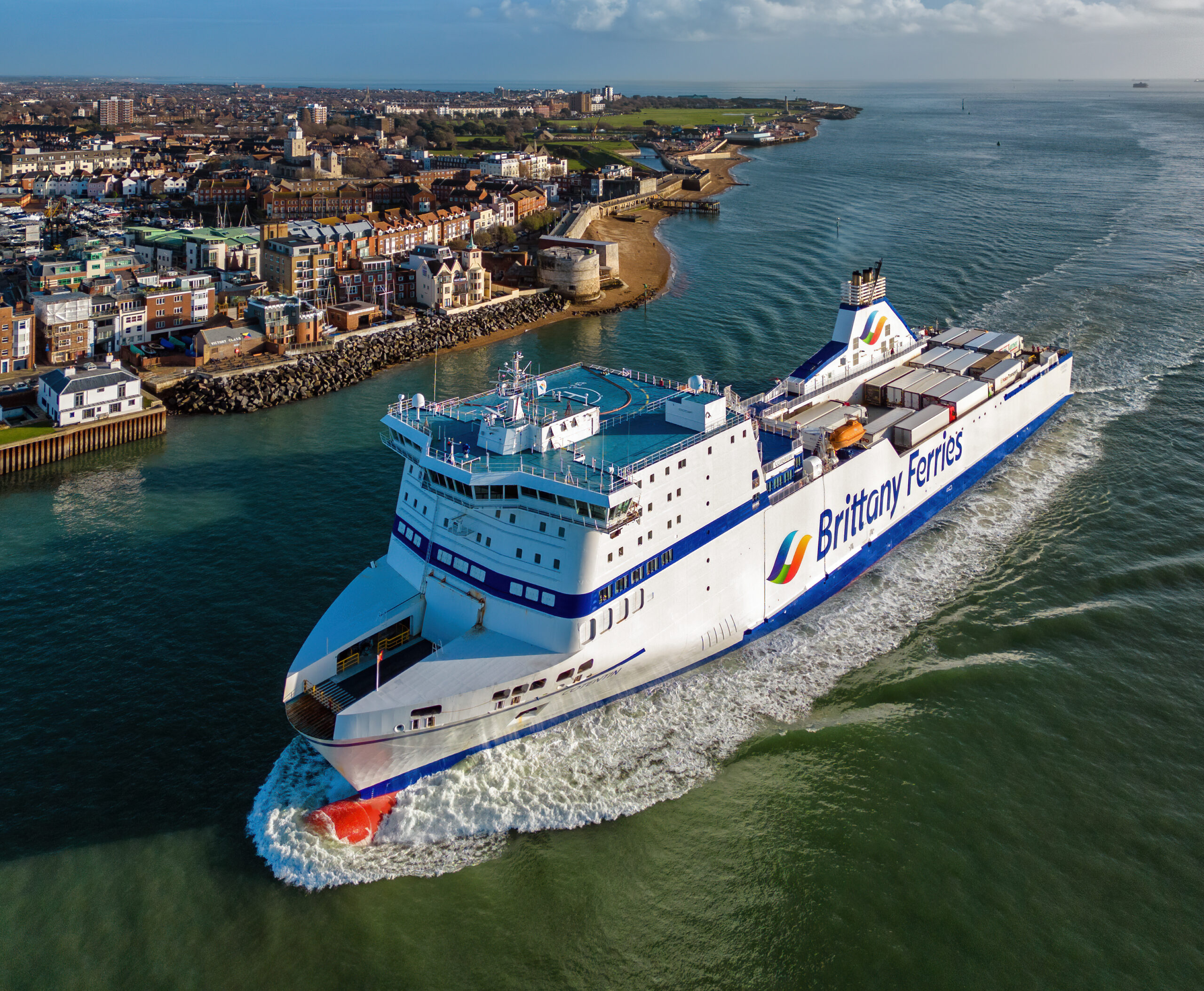
In the face of a rising tax burden, Covid loan repayments, cost-of-living concerns among passengers and unfair competition on the Eastern Channel, Brittany Ferries is taking steps to adapt to a new reality.
It says difficult decisions are necessary to manage the future. A project has been initiated to allocate resources more efficiently, including consolidating services where necessary and operating with a cleaner and more efficient fleet.
The world has moved on from Covid for most people and businesses. For Brittany Ferries however, the long tail of the crisis continues. It is proud to have repaid half the loan allocated to save the company during the health crisis already, but half is still outstanding.
Into this mix has been thrown the rising tax burden of ETS, the EU’s Emission Trading System. Brittany Ferries has invested in the cleanest, greenest fleet on the Channel, including five new vessels in five years, two of which were launched in 2025.
Despite this, the company faces a bill of some €27 million in 2026, with no allowance for the industry-leading investment already made. That’s an EU financial burden even before the UK begins to introduce an equivalent scheme for ships operating in British waters.
Routes and ships
To prepare for the future, Brittany Ferries is taking a pragmatic approach to its fleet. This includes the sale of two ships. The Poole to Cherbourg route served by 1992-built ship Barfleur will be closed from November 2026 and the ship sold. However, a daily service from Portsmouth to Cherbourg will operate in its place.
In addition, 2007 built Cotentin which runs Cherbourg to Rosslare will be sold, while the route will continue to operate with other vessels.
Furthermore, in the face of unfair competition on the Eastern Channel, caused by subsidies1 to run the loss-making Dieppe-Newhaven route, the company is looking to close the Portsmouth to Le Havre route from October 2026. It has operated this route for as long as possible while legal challenges are still being considered by Brussels.
Poole/Guernsey & Poole/Cherbourg service changes
Ships serving Guernsey, Poole and Cherbourg will be allocated to a more efficient schedule from 1 November 2026. The outline plan is as follows:
- Brittany Ferries Islander: will serve a triangular route as follows: Portsmouth to Guernsey, Guernsey to Cherbourg, Cherbourg to Portsmouth
- Brittany Ferries Voyager (fast craft) will continue to serve Poole to Guernsey, but with the option to travel on to St Malo
- The opening of Guernsey to the freight hub of Cherbourg promises new trade partnerships and opportunities.
“Brittany Ferries has a track record in adapting its business to long- and short-term challenges,” said Christophe Mathieu, CEO Brittany Ferries. “We overcame Covid when borders were shut, we continue to wrestle with the consequences of Brexit and we are taking steps to make a holiday in France or Spain as reasonable as possible.
“But we have to be realistic. We need adapt and that means a plan to secure a future that will continue to bring opportunities for all those who live and work in the regions we serve. We have informed our ports and will work with everyone affected on this plan for the future.”
- SMPAT DSP Le Syndicat Mixte de Promotion de l’Activité Transmanche (SMPAT)
-Ends-
About Brittany Ferries
Brittany Ferries was conceived in 1972, starting life as a freight-only ferry-service on 2nd January the following year. The first vessel (Kerisnel) linked Roscoff in Brittany with Plymouth on the southwest of England and carried a cargo of cauliflowers and cognac. Since then, the company has progressively launched, then strengthened its shipping routes. In more than 52 years of service, millions of passengers and businesses have travelled by sea across the so-called Atlantic Arc (France, UK, Spain and Ireland). They rely on the links forged by more than five decades of experience. In addition to cutting congestion and emissions on busy roads, Brittany Ferries’ motorways-of the sea have helped enrich local communities, creating jobs, nurturing international tourism and boosting cross-border trade. Five new vessels joined the fleet between 2019 and 2025. Two LNG-electric-hybrids (Saint-Malo in February 2025 and Guillaume de Normandie in April 2025) complete the largest fleet renewal programme in the company’s history.
More details, and images here:
- Brittany Ferries consumer site
- Brittany Ferries newsroom
- Brittany Ferries image bank
- Brittany Ferries corporate site
Press contacts:
- Nigel Wonnacott [email protected]
- Christopher Jones [email protected]