 News
News
French-flagged Wexford to replace Norbay on Cherbourg to Rosslare
-
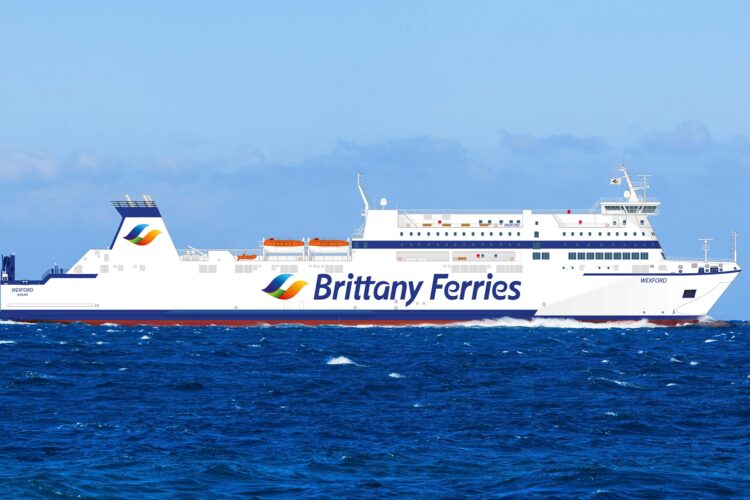 An artist's impression of Wexford
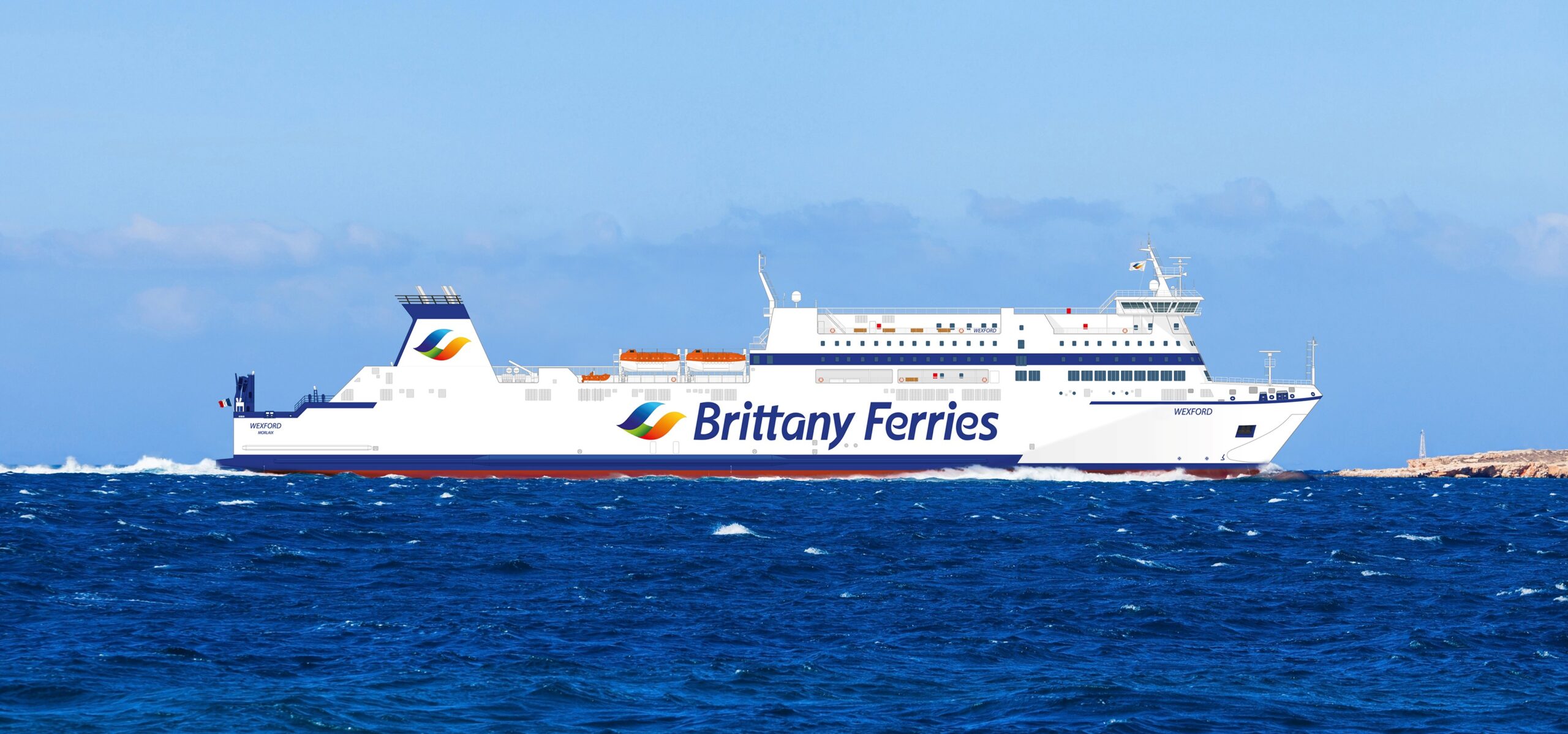
Brittany Ferries is delighted to announce the charter of a new ‘ro-Pax’ ferry to serve the Cherbourg Rosslare route.
Currently operating under the name Vizzavona, the re-named Wexford will replace Norbay a freight ship currently on temporary charter to Brittany Ferries.
Wexford will be French flagged and crewed by French seafarers. She will begin operations in March 2027. Three weekly return crossings will made from Rosslare-Cherbourg as well as one Portsmouth-Cherbourg rotation. Tickets will be on sale by the end of next month.
French flag
Brittany Ferries is the largest employer of French seafarers. Its commitment to the French flag remains a cornerstone of its business. So, the company is proud that it has once again fulfilled a promise on ships operating between Ireland and France.
One year ago, directors promised that Norbay would be replaced as soon as was possible by a suitable ro-pax ship and that it would operate under the French flag. With the signing of the charter for Wexford, it has met that commitment.
Choice, capacity and frequency from Ireland
Carrying up to 500 passengers and 1.5 miles of vehicles, Wexford completes Brittany Ferries’ network of long-haul routes to and from Ireland, adding valuable passenger and freight capacity alongside frequent, direct sailings to northern Spain, Brittany and Normandy.
Ireland will be served by a varied and versatile fleet of five ships: Salamanca, Wexford, Clipper, Armorique and Pont-Aven, offering up to seven weekly return sailings between Rosslare and Cherbourg, two weekly return sailings between Rosslare and Bilbao, and two weekly return sailings between Cork and Roscoff.
Boosting holiday traffic
Freight-oriented Norbay limited important passenger traffic due to cabin availability. Wexford, a ro-pax vessel designed for holiday makers, will redress the balance and boost visitor numbers heading to Normandy from Ireland in 2027.
Its introduction reinforces the strategic importance of Ireland for the business and demonstrates Brittany Ferries’ commitment to Normandy in a celebratory year for the region.
Wexford boasts a strong configuration of cabins for passengers. In total, she hosts 146 with space for around 130 cars on board.
While freight is not the focus, it is not an afterthought either. Wexford’s 2,500 lane metres are more than enough to ensure trade links between mainland Europe are strengthened further by the introduction of the ship.
Commenting on the news, Brittany Ferries’ CEO Christophe Mathieu said, “The charter of our new ship Wexford is a positive step for the company and for the regions we serve in France and Ireland. We know there is a strong market for holiday traffic, and this ship will better meet the demands of travellers on both sides of the Irish Sea.
“We have also shown our commitment to those who crew our ships, and we never forget that it is they who define our success and help shape our future.”
—Ends—
Notes to editors
Press contacts
- Nigel Wonnacott [email protected]
- Christopher Jones [email protected]
- Ian Le Moigne [email protected]
Images
Please visit Brittany Ferries’ media image library: https://brittanyferriesnewsroom.com/image_category/wexford/
About Brittany Ferries
Brittany Ferries was conceived in 1972, starting life as a freight-only ferry-service on 2nd January the following year. The first vessel (Kerisnel) linked Roscoff in Brittany with Plymouth on the southwest coast of England and carried a cargo of cauliflowers and cognac.
Since then, the company has progressively launched, then strengthened its shipping routes. In more than 53 years of service, millions of passengers and businesses have travelled by sea across the so-called ‘Atlantic Arc’ (western France, UK, northern Spain and Ireland). They rely on the links forged by more than five decades of experience. In addition to cutting congestion and emissions on busy roads, Brittany Ferries’ motorways-of the sea (and more recently rail) have helped enrich local communities, creating jobs, nurturing international tourism and boosting cross-border trade.
Five new vessels have joined the fleet in the last six years. Two LNG-hybrids (Saint-Malo in February 2025 and Guillaume de Normandie in April 2025) completed the largest fleet renewal programme in the company’s history.