 News

EU-UK closer ties : Brittany Ferries comment and interview bids
-
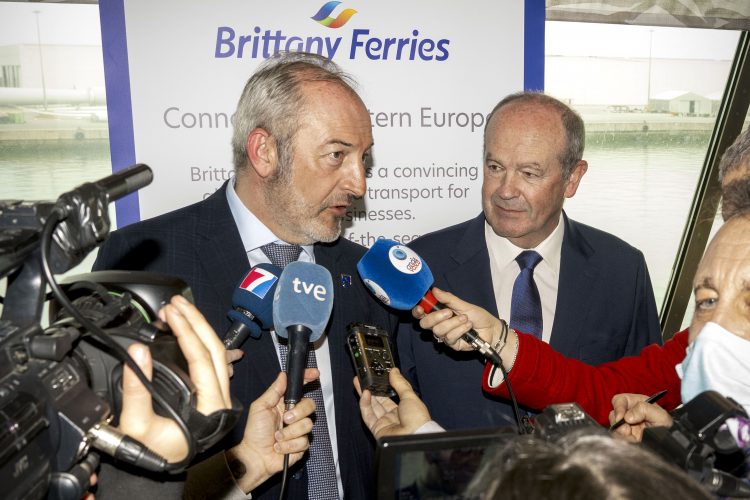 CEO Christophe Mathieu (fluent English, French and Spanish) available for interview

Media Advisory note – 17 November 2026
No transport company embodies cross-border trade and travel like Brittany Ferries. Almost every issue on the table this Friday affects the business in some way. From fish exporters based in Brixham to thousands of pet owners who travel each year and onto harmonisation of ETS (emission trading scheme), Brittany Ferries carries it all.
The vast majority of customers are British (around 90%). Ships are French, owned and crewed by French seafarers. Brittany Ferries is thus commercially very British, operationally very French.
There is a rich back-story too. The company set sail on 2 January 1973, the day after the UK joined the EEC. Breton vegetable farmers chartered a ship to exploit new market opportunities across the Channel, when banks and existing operators scoffed at their proposal. Brittany Ferries was thus born as a freight-only operation, carrying cauliflowers, cognac and artichokes.
By 1975, a passenger division had blossomed. Brits had urged the farmers to carry them (as well as produce) for holidays to Brittany, Normandy and the Loire. By the end of the decade two million passengers and 200,000 freight units became the norm. This endured. Until 2016.
Brexit came as a blow to the company, psychologically and commercially. Passenger volumes remain well below pre-Brexit levels. Freight is 20% down. The raison d’etre of the business – to enrich regions, connect people and facilitate trade – was seriously tested. Routes such as Portsmouth to Le Havre and Poole to Cherbourg recently closed due to continued cost pressures.
Christophe Mathieu, CEO, comments:
“We have made no secret of the significant harm that Brexit has done to our business,” he said. “Numbers remain down, we carry fewer passengers and we have had to close loss-making routes as a consequence.
“This is why closer alignment is so important. Cutting red tape, removing the requirement for checks on goods travelling across the Channel, will help hauliers. The reintroduction of pet passports will support 100,000 travellers a year and plans for a youth travel and work scheme will enrich all youngsters who participate. Brexit’s harmful and restrictive barriers can’t come down soon enough.
Interview bids:
Christophe Mathieu has been CEO for more than a decade (including for the Brexit vote of course). He is available for interview from the company’s base in Roscoff down-the-line. Spokesman Nigel Wonnacott has been UK public affairs lead for 11 years. He is free for lives and down-the-lines in the UK. Nigel is based in Portsmouth.
Please contact [email protected]